
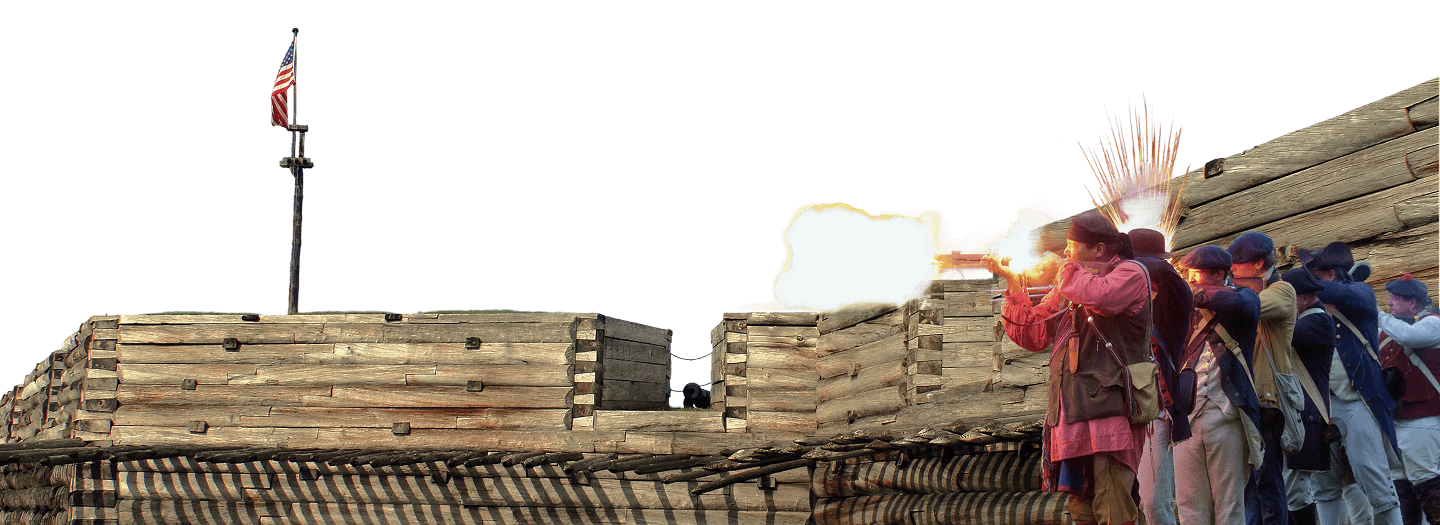
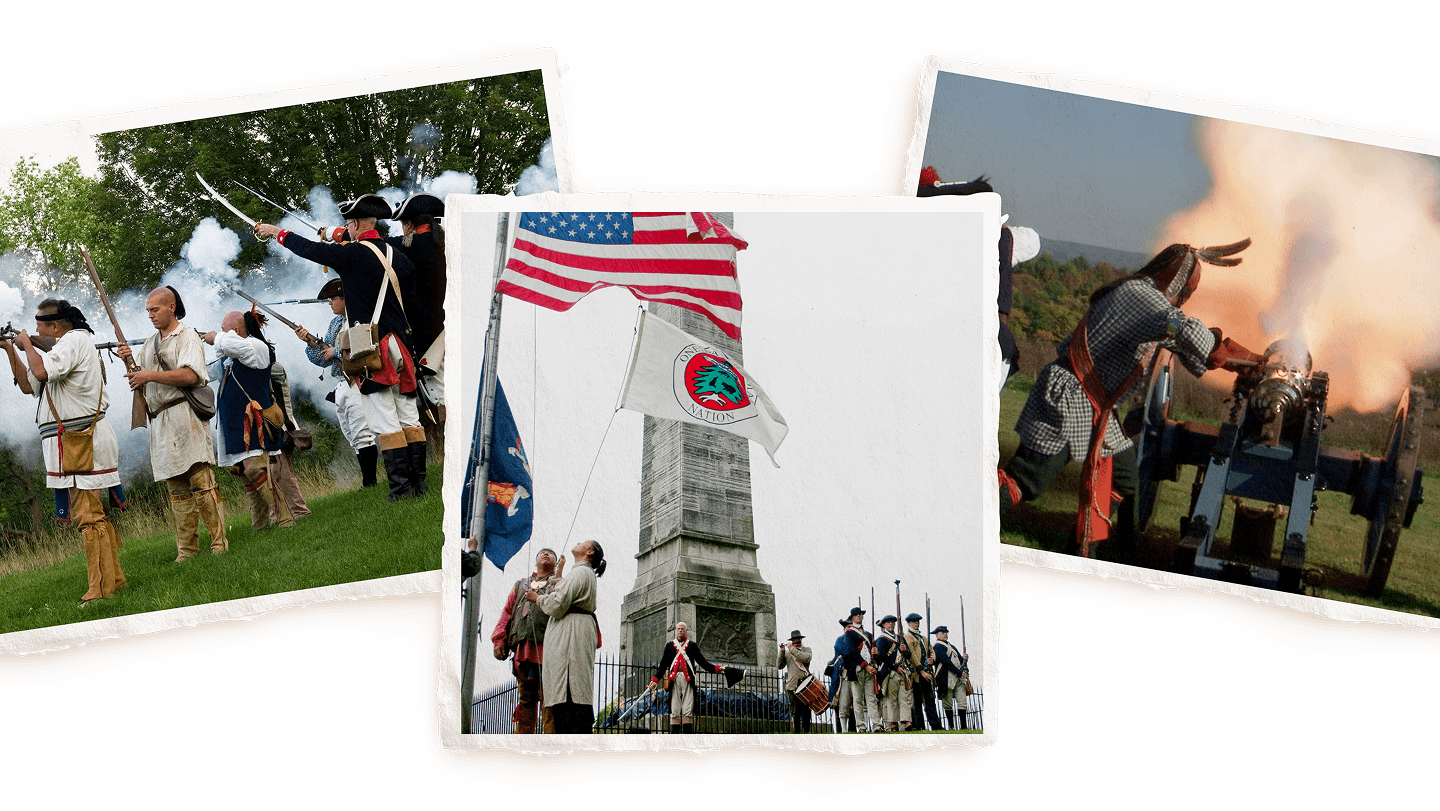
The Oneida Indian Nation fought alongside the American colonists in their fight for freedom from British tyranny and played a pivotal role in the founding of the United States.
The Oneidas’ Role in the Revolution
When war between the fledgling colonies and England became inevitable, the Oneidas had to make a decision. Chief Shenendoah convinced the Oneida people to side with the colonists in their fight for freedom and independence – breaking from their Haudenosaunee brothers and sisters from the other Nations.
After the War
As peace dawned for the colonists, it was eclipsed for the Oneidas. The decision to split from the other members of the Confederacy led to ill feelings.
More sorrow followed despite promises made by the federal government to preserve and protect the rights of the Oneidas to their ancestral lands.
The Battle of Oriskany
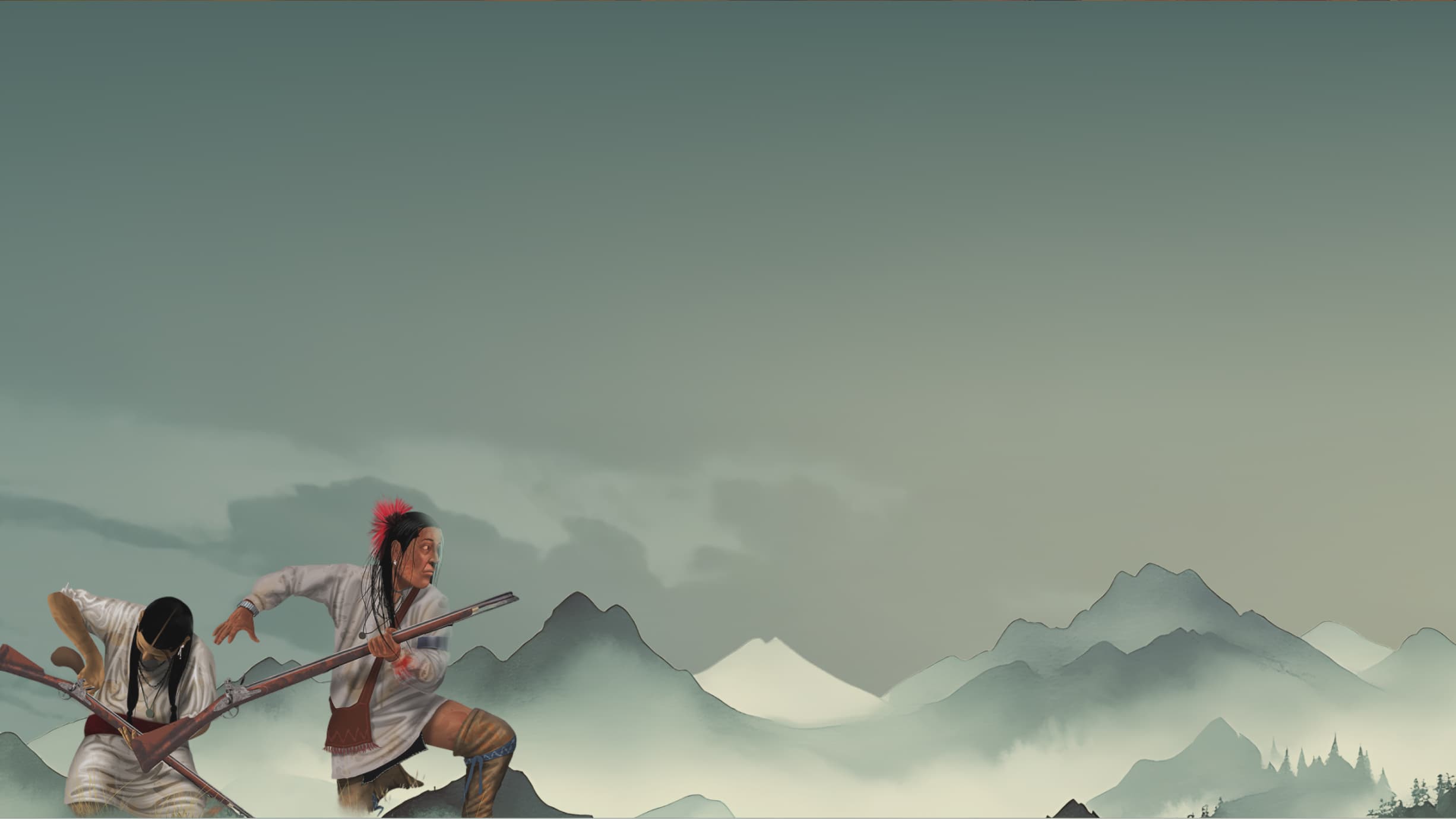
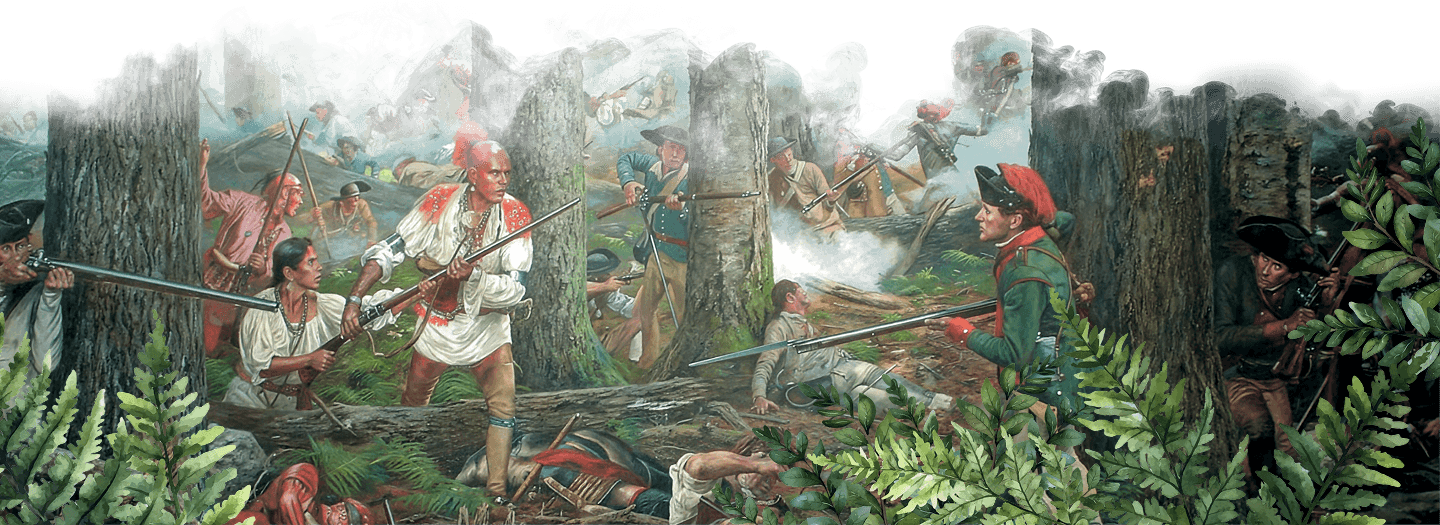
During the harrowing Battle of Oriskany on August 6, 1777, the Oneida not only fought against British forces, but also against their fellow Haudenosaunee brothers. The original painting, “The Oneida at the Battle of Oriskany, August 6, 1777” by noted historical artist Don Troiani, depicts one of the bloodiest battles of the Revolutionary War, with an emphasis on the Oneidas who fought alongside the colonists.
The scene centers on Han Yerry (Tewahongalahkon), an Oneida warrior who, despite being shot in the wrist, continued to fight with the aid of his wife, Two Kettles Together (Tyonajanegen). The Oneidas and the colonial militia, led by Gen. Nicholas Herkimer, were able to stop the advance of the British troops, a feat that is widely considered to be a turning point in the Revolutionary War.
The Treaty of Canandaigua
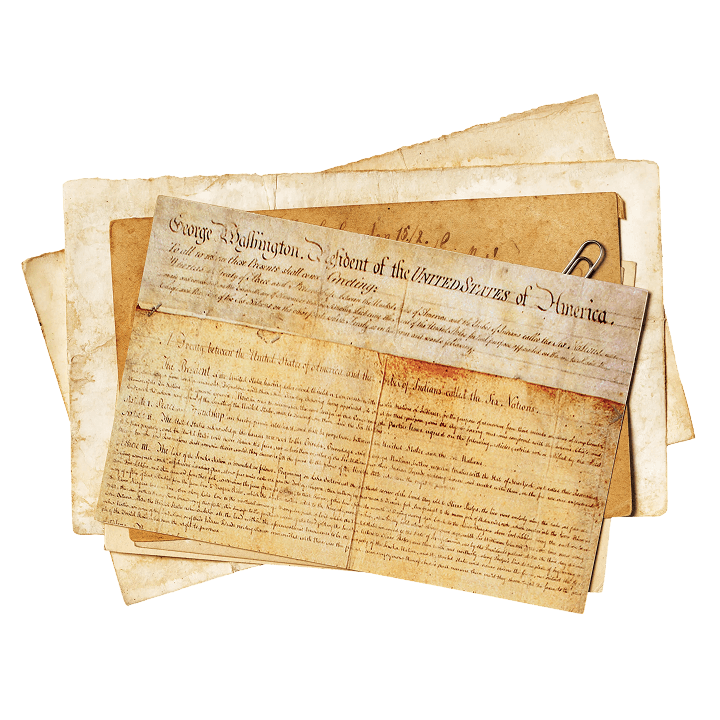
In 1789, the new U.S. Constitution was ratified, which included provisions barring state governments from entering into treaties and an assurance that treaties properly made with the federal government “shall be the supreme Law of the Land.”
The 1794 Treaty of Canandaigua, signed by President George Washington and the Oneidas, states, “The United States acknowledges the lands reserved to the Oneida…to be their property; and the United States will never claim the same, nor disturb them…”
This, like other treaties, memorialized the legal right of the Oneida Indian Nation to own, govern and control its lands. In accordance with its terms, the United States still delivers bolts of cloth – known as treaty cloth or annuity cloth – to the Oneida Indian Nation and the other members of the Confederacy every year.
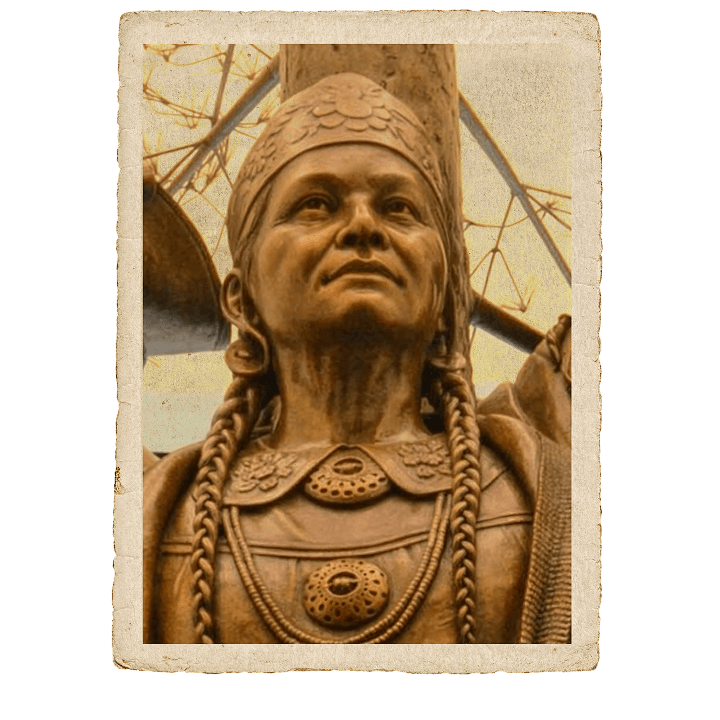
Polly Cooper
Heroine of the Revolutionary War
Polly Cooper was an Oneida woman who was among a group of Oneidas that travelled to Valley Forge after the bitter winter of 1777-78 to assist Gen. George Washington’s troops. Upon arrival, she taught the soldiers how to prepare and cook the corn, which required a specific method to be safe for consumption. Polly would stay to assist Gen. George Washington and his staff.
After the war, the Colonial Army wanted to pay Polly Cooper for her valiant service, but she refused any recompense, stating it was her duty to help her friends in their time of need. She was later given a shawl and bonnet from Martha Washington as a token of their appreciation. The shawl has been handed down by successive descendants of Polly.
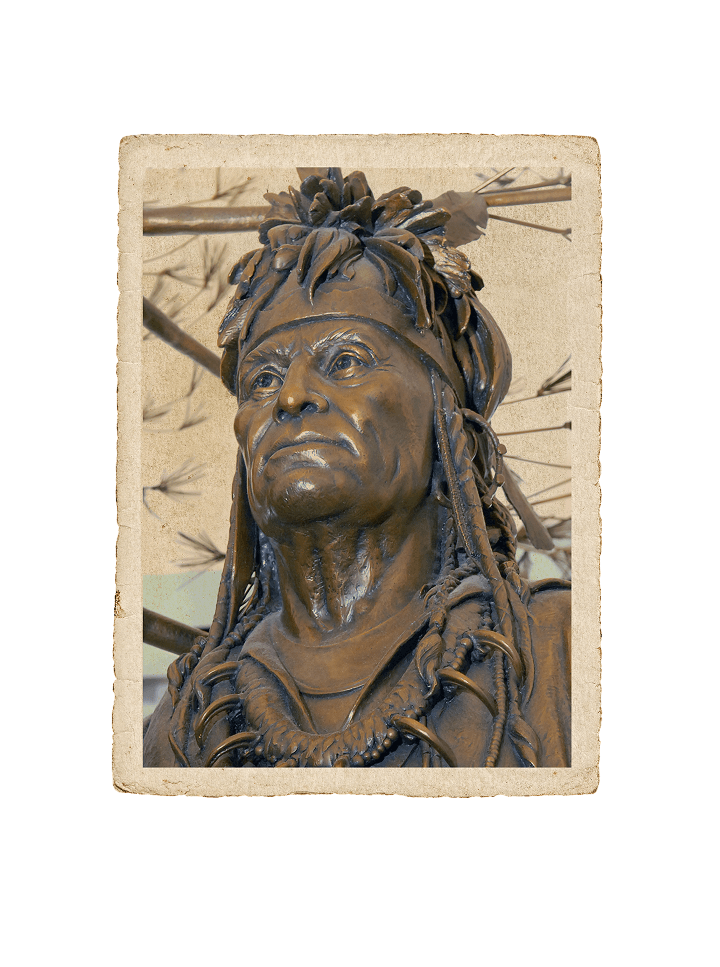
Chief Shenendoah
Ageless Leader
Shenendoah was instrumental in the Oneidas’ choice to side with the colonists during the Revolutionary War and ranks high among the Nation’s most significant historical figures. Shenendoah was a hero of the War for Independence, wampum keeper of the Nation and the inaugurator of government-to-government agreements.
Shenendoah, along with other Oneida chiefs, made decisions guided by how those choices would affect the seventh generation to come. Passing at 110 years old, he witnessed about six of those generations in his lifetime.
Our Legacy of Service
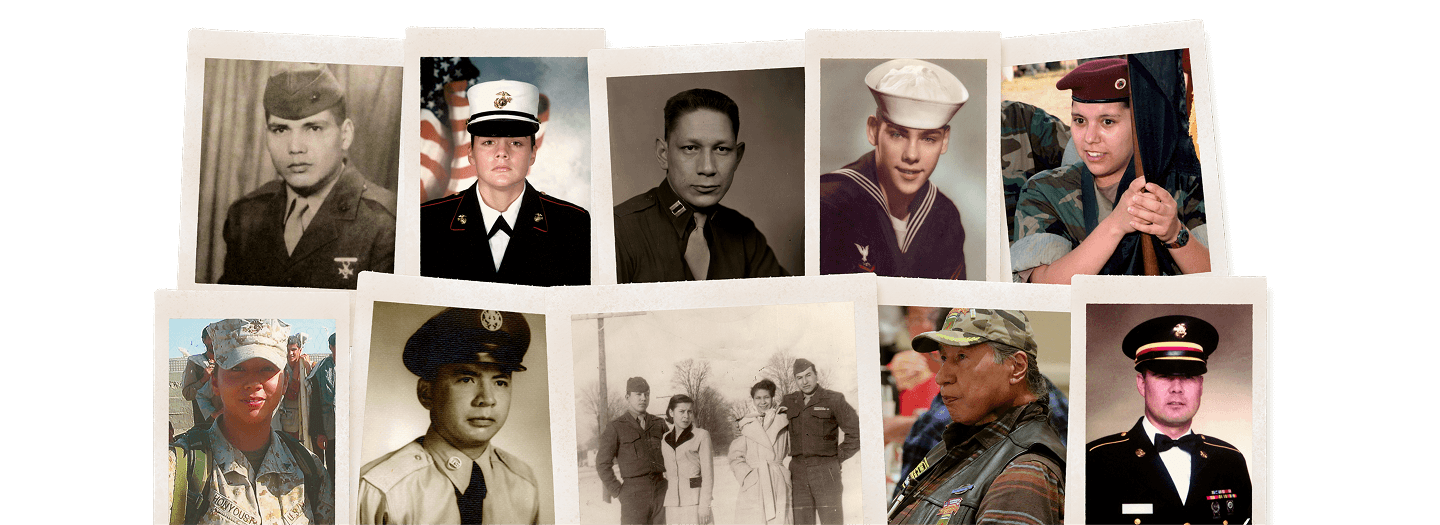
Oneida Indian Nation Members continue to serve in the United States military today, a legacy of service that goes back to the founding of the country. We take great pride in this interminable bond and honor all Oneidas who choose to protect our country’s freedom at home and abroad.