19th century
As the fledgling United States, in its infancy, continued to build the framework of its government, Oneidas remained steadfast in their support of independence and freedom. At the turn of the 18th century, the young country, now with sixteen recognized states, was still under siege from foreign adversaries.
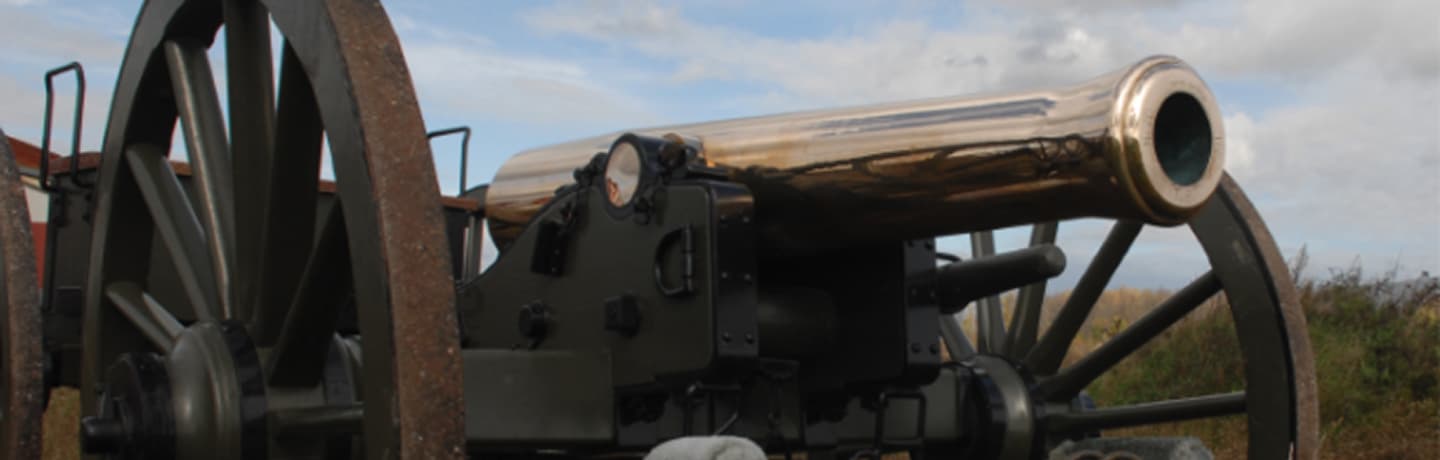
The British were still impeding many American liberties and rights through trade.
With morale declining back in Great Britain as they fought in the Napoleonic Wars, the maritime power enacted harsher trade restrictions on the United States. This led to the War of 1812, which many consider the second war for independence for the Americans. President James Madison persuaded Congress to declare war on June 18, 1812.
President Madison received a letter from the Chiefs of the Oneida Indian Nation on September 11, 1813 that expressed the Oneidas’ strong support for their American allies. Similar to the Revolutionary War, the British employed many of their Indian allies to conduct raids on American strongholds, but it was the Oneida that helped the U.S. in a key battle to secure key ports along Lake Ontario.
Battle of Big Sandy Creek
The Oneida-led ambush at Big Sandy Creek secured a crucial victory for the U.S. by protecting vital supplies during the War of 1812.
In May 1814, U.S. Navy Captain Melanchton T. Woolsey attempted to move a convoy of 19 bateaux carrying 34 cannon and supplies along Lake Ontario's shore, joined by 130 Oneida warriors who followed on land as protection. Unaware of the ambush prepared by American riflemen and the Oneida presence, a British force under Captain Stephen Popham cornered the convoy two miles up Big Sandy Creek. The ambush was sprung, and in a fifteen-minute engagement, the British were quickly defeated, suffering 17 killed and 47 wounded, forcing Popham to surrender his entire force. The Oneida pursued and captured or killed British soldiers who fled into the woods, securing a crucial American victory with light casualties.
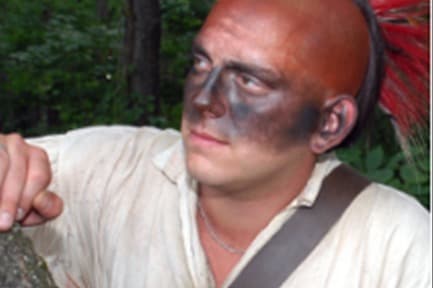
“Woolsey waited until nightfall to leave and rendezvoused with 130 Oneida Indians he arranged to meet with at the mouth of the Big Salmon River”
Women continued to serve
Stitching back the fabric of the Six Nations people.
In the earliest years of the United States, members of the Haudenosaunee Confederacy had to endure brutal civil war as neutrality became an impossibility. But through those times, it was Haudenosaunee women who served and worked to stitch back the fabric of the Six Nations people. Records indicate several Haudenosaunee women served in the American military, and that continued into the 19th century.
“Dolly Schenandoah, an Oneida aged 29, enlisted for three-months’ service in June 1813, in the same regiment of Indian volunteers.”
“In the summer of 1812, the Onondagas in central New York, allied with the United States since the federal Treaty of Canandaigua of 1794, joined in with the Americans against the British. Sadly, Haudenosaunee from New York found themselves facing off against British-allied Haudenosaunee from the Six Nations Reserve in Ontario.”
- American Indian Magazine
Later conflicts
Oneidas have served in every military conflict since the founding of the United States.
Oneidas have served in every military conflict since the founding of the United States. As the country braced for its own civil war in the 1850s and 60s, the Haudenosaunee were influential in the success of Union forces that abolished slavery; and as the Spanish-controlled colonies in the Caribbean began oppressing its citizens, Haudenosaunee members again backed U.S.-led efforts, and the eventual Spanish-American War, in their fight for freedom.
You may also be interested in
Educator resources
A closer look at Haudenosaunee customs directly from Oneida Indian Nation Members.